Roofing and masonry services in your service area
Your Logo services

Roofing, masonry, waterproofing, and exterior construction.

Your Logo works on the surfaces and systems that shed water, protect exterior walls, stabilize masonry, manage below-grade moisture, and create safe access around your service area properties.

New residential roof installation
Complete roof system

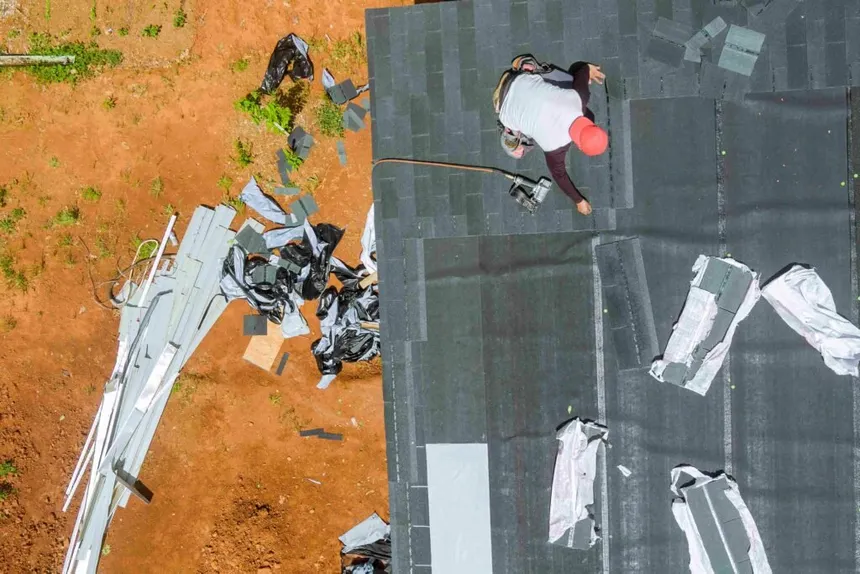
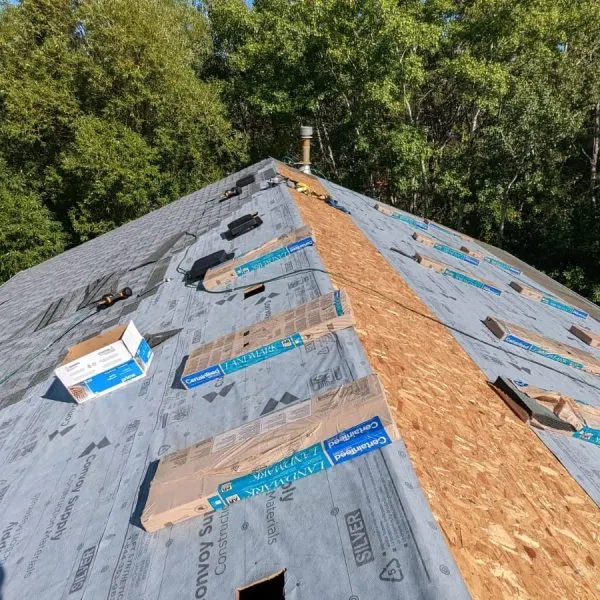
New Roofs

A new roof requires more than the visible finish. The work considers the existing deck, underlayment, ice and water protection, ventilation, flashing, penetrations, valleys, ridges, starter edges, and drainage so the system sheds water through every transition.

  • Roof replacement
  • Deck condition review
  • Underlayment and membranes
  • Flashing and ventilation
Residential roof repair
Targeted roof correction

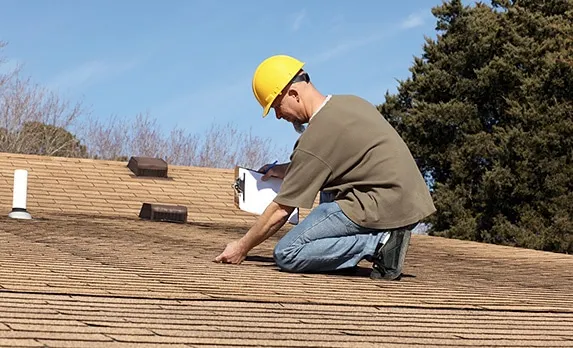
Roof Repairs

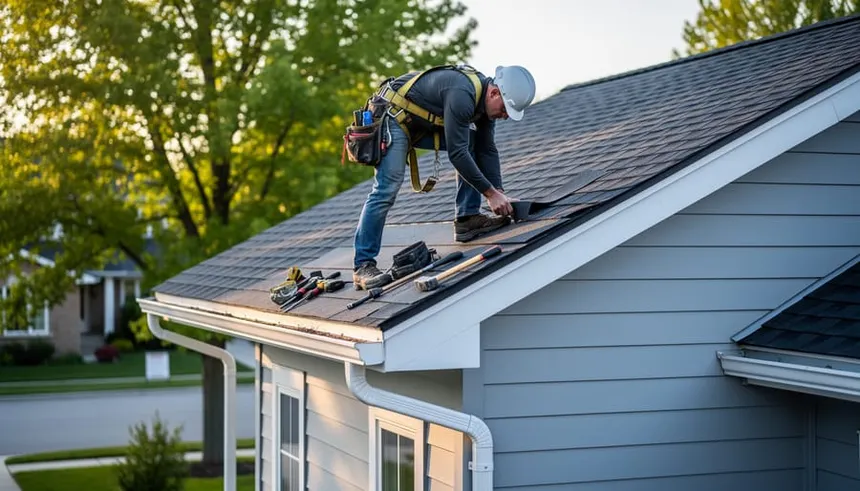
Localized roof damage may involve materials beyond the obvious opening. Repair work reviews worn shingles or membrane, flashing, roof edges, valleys, vents, nearby fasteners, and sealants to define the affected section and reconnect it to sound materials.

  • Storm-damaged areas
  • Flashing correction
  • Roof edge repairs
  • Localized material replacement
Roof leak investigation and repair
Water entry

Roof Leak Repair

Interior staining does not always sit directly below the entry point. Leak repair follows vulnerable seams, flashing, penetrations, valleys, vents, roof-to-wall connections, and fasteners to identify how water reaches the building before the damaged area is closed.

  • Leak-source investigation
  • Vent and flashing repairs
  • Valley and seam attention
  • Roof-to-wall transitions
Flat roof membrane repair
Low-slope surfaces

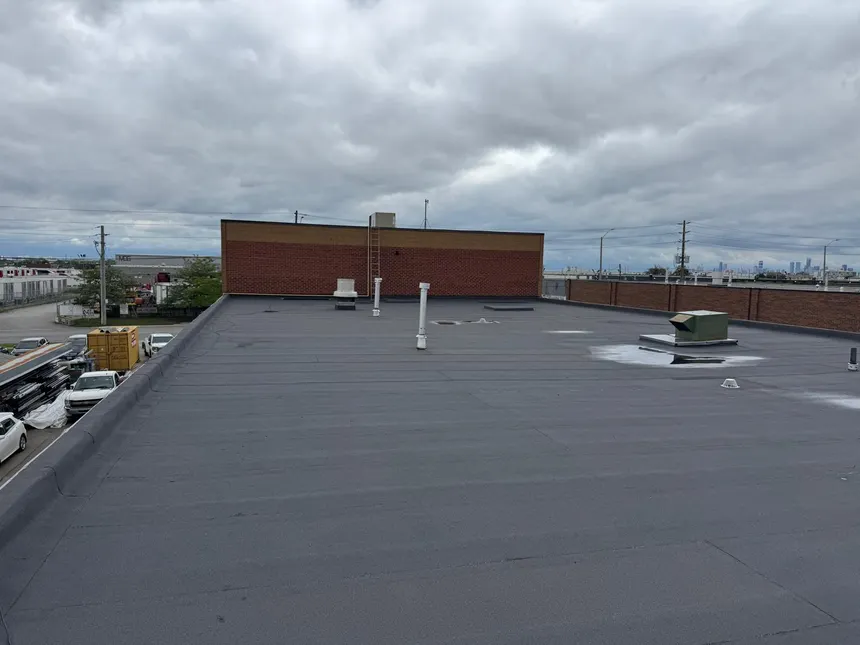
Flat Roof Repair

Flat and low-slope roofs depend on intact membranes and sealed transitions. Repairs may address open seams, punctures, blisters, failed perimeter details, drains, penetrations, flashing, and locations where standing water accelerates wear.

  • Membrane patching
  • Seam and edge repairs
  • Drainage-area attention
  • Penetration sealing
Damaged asphalt shingle repair
Asphalt shingles

Shingle Repair

Missing, curling, lifted, cracked, or wind-damaged shingles can expose the courses below. Replacement work protects the surrounding material while restoring fastening, overlap, alignment, and the water-shedding pattern of the roof.

  • Missing shingle replacement
  • Wind-damaged sections
  • Lifted and cracked shingles
  • Ridge and edge repairs
Eavestrough and downspout installation
Roof drainage

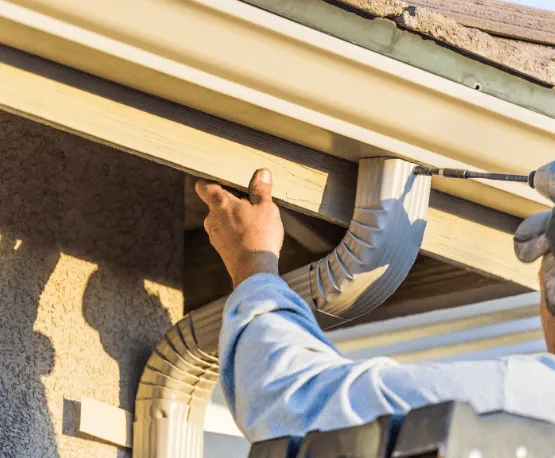
Eavestrough

Eavestroughs collect runoff at the roof edge and move it toward controlled discharge areas. Poor slope, leaking joints, undersized outlets, sagging sections, overflow, and short downspouts can redirect water toward walls, steps, walkways, and foundations.

  • Gutter replacement
  • Joint and outlet repairs
  • Downspout installation
  • Discharge-path improvement
Exterior masonry construction
Brick, block and stone

Masonry

Masonry repair and construction involve the units, mortar joints, support, alignment, and surrounding surfaces. Your Logo addresses deteriorated walls, damaged sections, loose materials, open joints, cracked units, and exterior masonry features.

  • Brick and block work
  • Stone masonry
  • Wall repairs
  • Damaged section rebuilding
Brickwork wall repair
Exterior brick

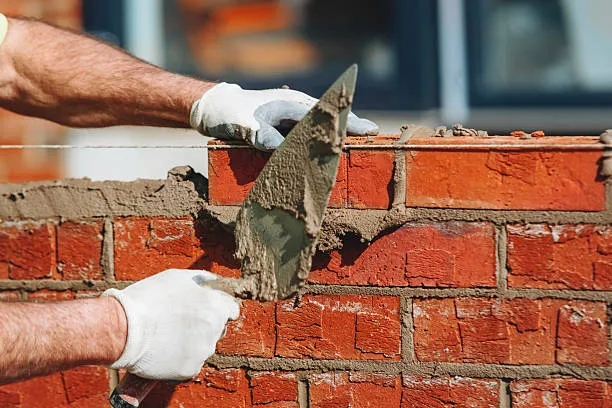
Brickwork

Brickwork can deteriorate through water exposure, failed mortar, movement, impact, or freeze-thaw cycling. Repairs consider the damaged courses, joint profile, bonding pattern, alignment, and how the new work meets the existing wall.

  • Cracked brick replacement
  • Loose course repair
  • Wall section rebuilding
  • Mortar joint finishing
Concrete block wall construction
Concrete masonry units

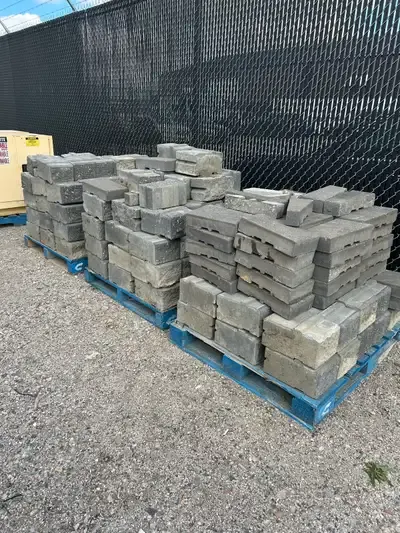
Block Walls

Block wall work requires level courses, consistent joints, correct bonding, and stable transitions. Construction and repairs can address cracked units, open mortar, deteriorated sections, damaged corners, and uneven wall areas.

  • New block walls
  • Damaged unit replacement
  • Mortar joint repair
  • Corner and section rebuilding
Masonry tuckpointing
Mortar joint renewal

Tuckpointing

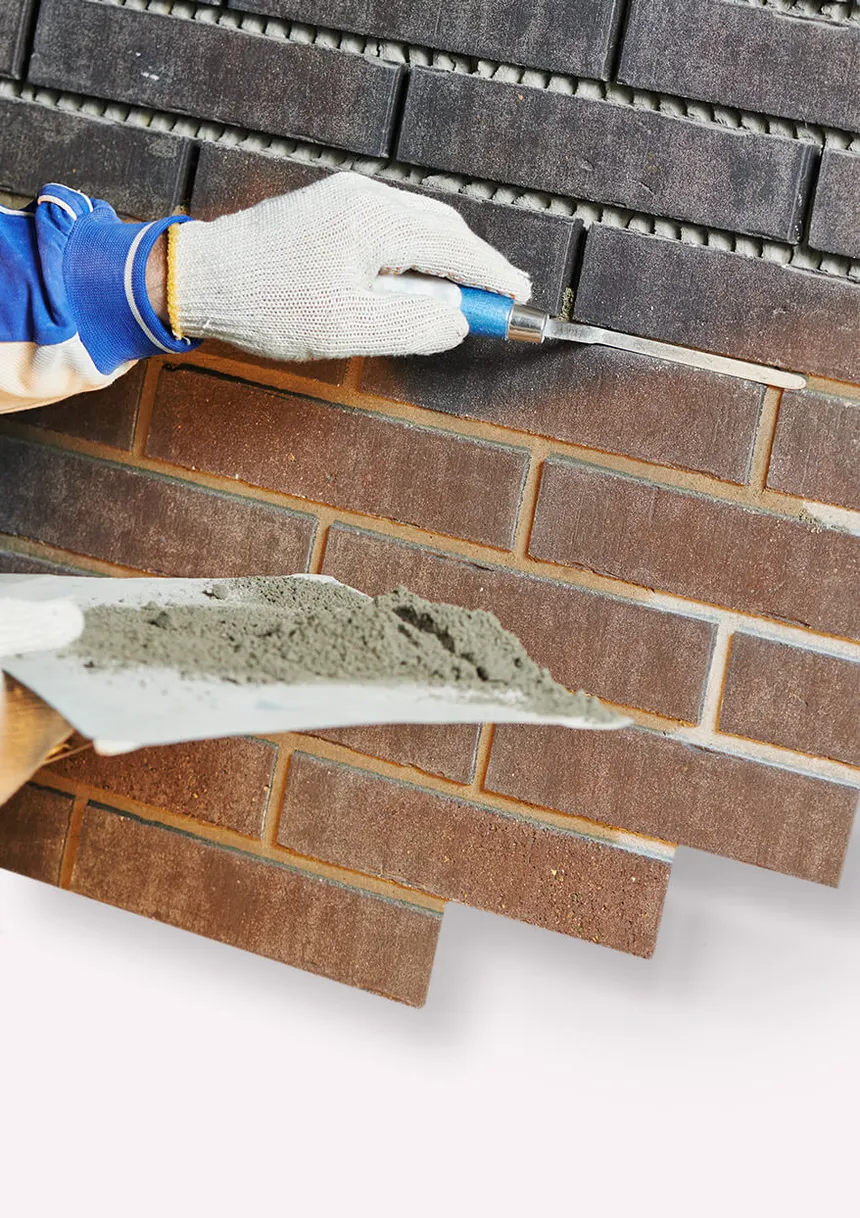
Deteriorated mortar allows more water into a masonry wall and leaves the edges of brick or block vulnerable. Tuckpointing removes unsound joint material to a suitable depth and installs new mortar with a consistent, compacted profile.

  • Failed mortar removal
  • Joint preparation
  • New mortar placement
  • Consistent joint profiles
Chimney masonry repair
Weather-exposed masonry

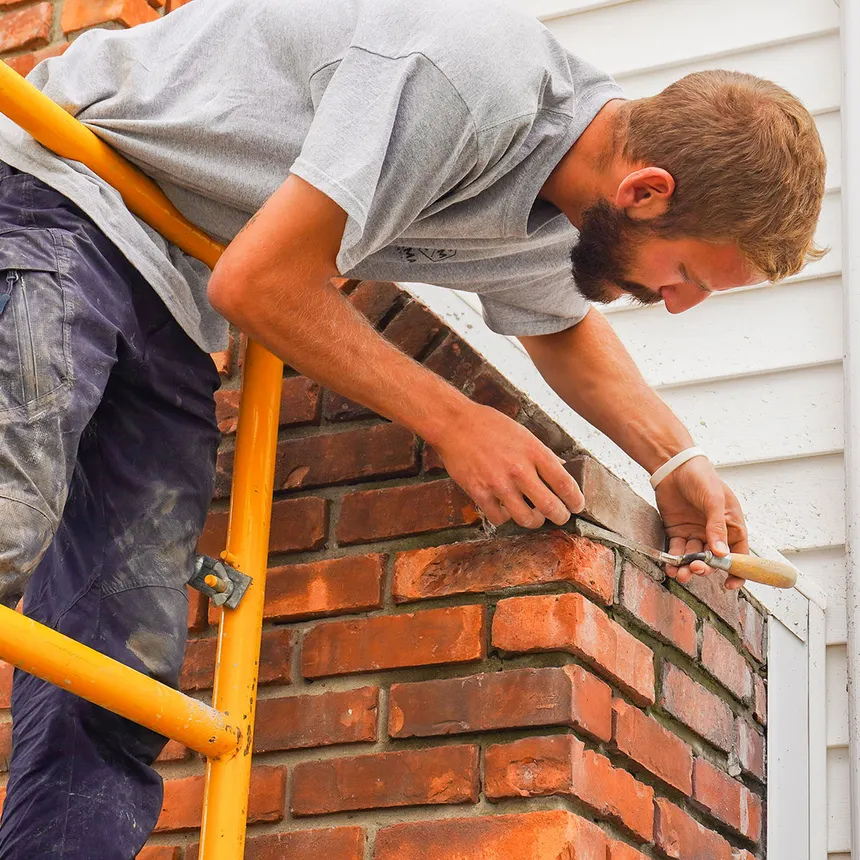
Chimney Repair

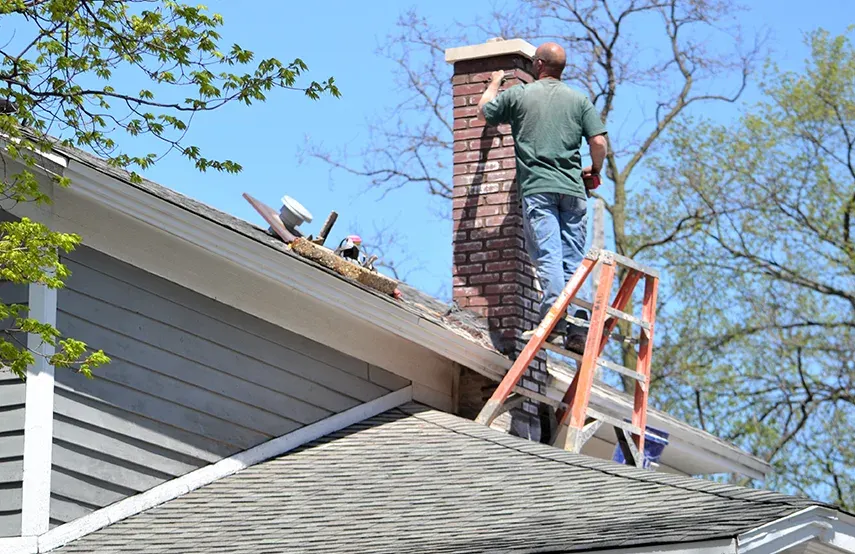
Chimneys face direct exposure to rain, snow, wind, freeze-thaw cycles, and temperature changes. Repair work can address cracked brick, open joints, loose sections, crown damage, cap concerns, and the flashing transition where the chimney meets the roof.

  • Brick and joint repairs
  • Crown attention
  • Loose section correction
  • Roofline transition review
Chimney rebuilding service
Masonry reconstruction

Chimney Rebuild

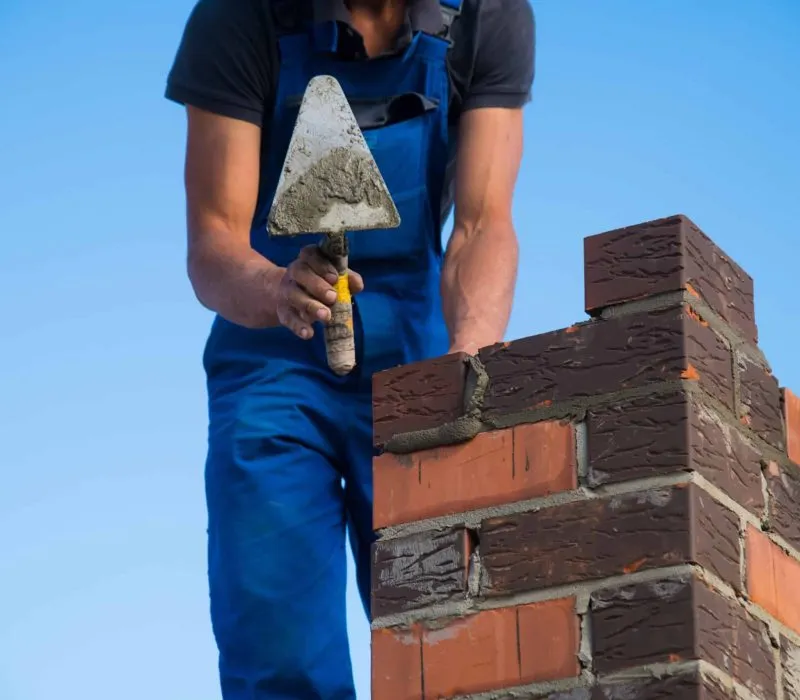
Extensive deterioration, movement, or unstable masonry may require rebuilding instead of repeated patching. The affected chimney is taken down to a sound level and rebuilt with attention to bonding, alignment, mortar joints, the crown, and top protection.

  • Partial chimney rebuilds
  • Upper chimney reconstruction
  • Brick and mortar renewal
  • Crown and cap finishing
Exterior foundation wall repair
Below-grade structure

Foundation Repair

Foundation surfaces can show cracks, damaged parging, exposed material, weathering, and moisture-related wear. Repair scope depends on the visible condition, surrounding grade, drainage, wall material, and whether water protection is also required.

  • Visible crack attention
  • Parging repair
  • Deteriorated surface repair
  • Exterior protection details
Basement wall repair
Lower-level surfaces

Basement Repair

Basement repair may involve cracks, worn wall sections, damaged surfaces, moisture-affected material, and preparation before refinishing. Exterior drainage, foundation condition, and waterproofing are considered when they may contribute to the interior issue.

  • Wall surface repair
  • Crack and joint attention
  • Moisture-damaged areas
  • Preparation before finishing
Basement waterproofing work
Below-grade moisture

Basement Waterproofing

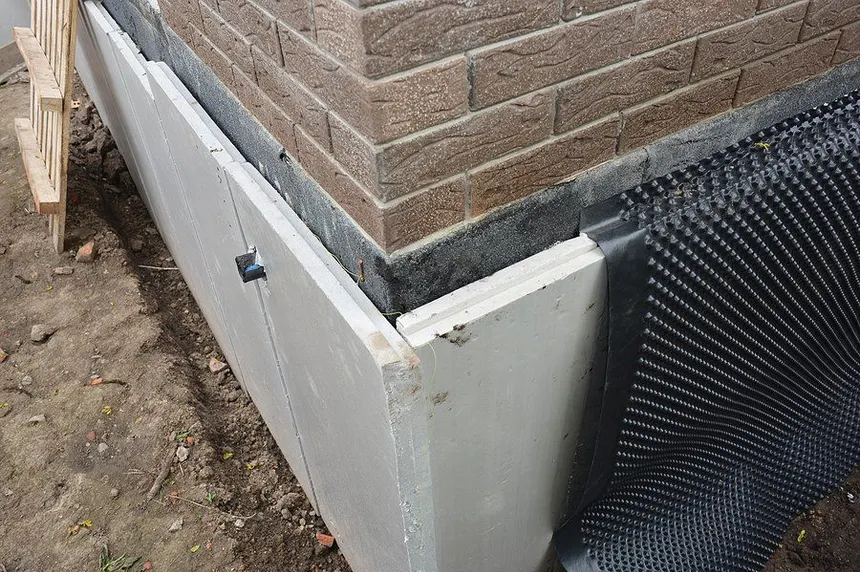
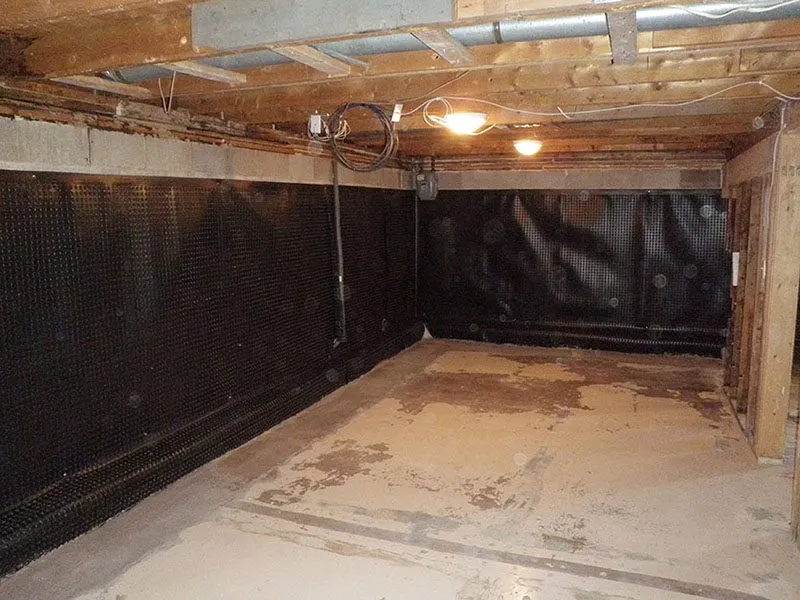
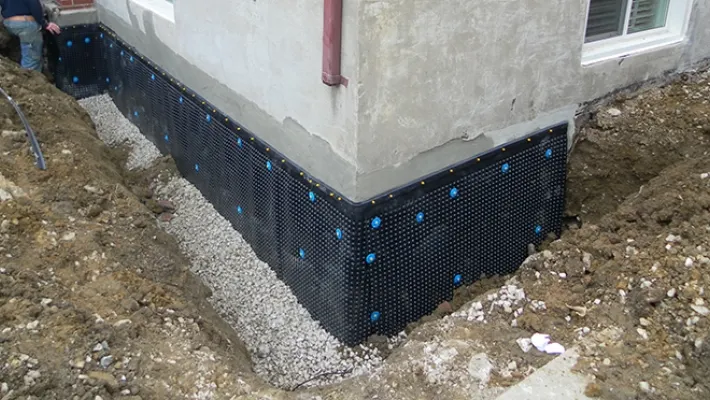
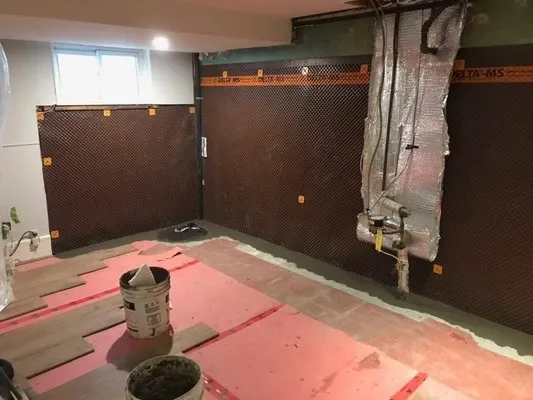
Basement waterproofing addresses water pressure and entry at below-grade walls. The work may include excavation or interior preparation, membranes, drainage-supporting materials, protection layers, sealed transitions, and discharge planning.

  • Below-grade wall protection
  • Membrane installation
  • Drainage materials
  • Transition and termination details
Exterior waterproofing work
Water-entry protection

Waterproofing

Waterproofing protects vulnerable surfaces from direct moisture entry. Proper preparation, compatible membranes or coatings, sealed joints, protected terminations, and drainage conditions help the system perform at foundations and other exposed areas.

  • Exterior wall waterproofing
  • Protective membranes
  • Joint and transition sealing
  • Drainage-focused work
Foundation dampproofing application
Ground moisture control

Dampproofing

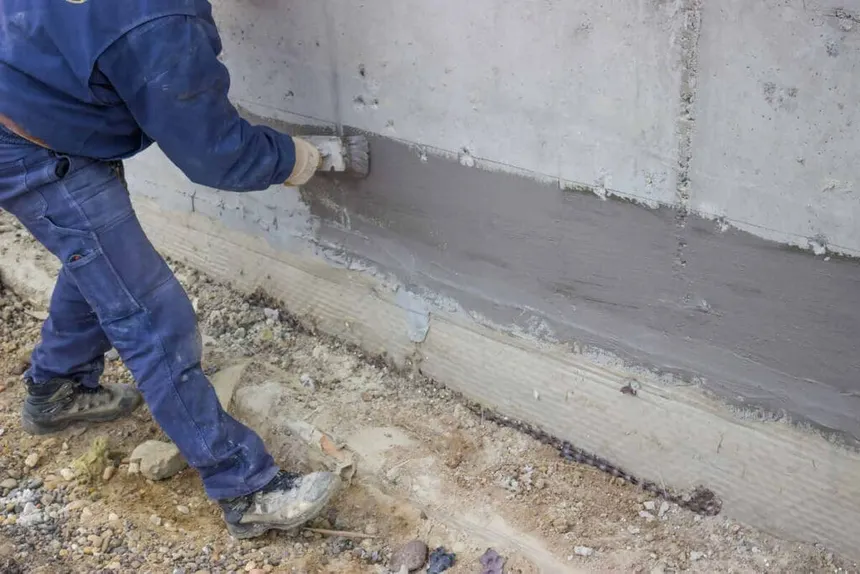
Dampproofing limits moisture transfer through below-grade foundation surfaces. The wall is prepared so the protective coating can cover the surface consistently, connect at joints, and remain protected before the surrounding area is restored.

  • Foundation surface preparation
  • Protective coating
  • Joint and edge coverage
  • Below-grade wall protection
Interlocking paver installation
Paver surfaces

Interlocking

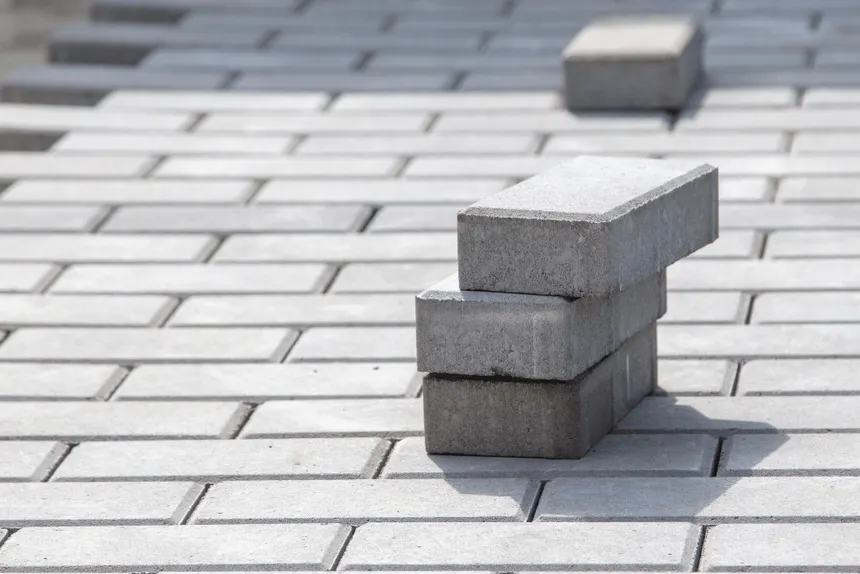
Interlocking surfaces depend on preparation below the pavers as much as the finished pattern. Installation and repair consider excavation, base compaction, slope, edge restraint, bedding, alignment, jointing material, and connections to entrances or steps.

  • Walkways and patios
  • Settled paver repair
  • Base and edge correction
  • Jointing and alignment
Exterior masonry step construction
Safe exterior access

Steps

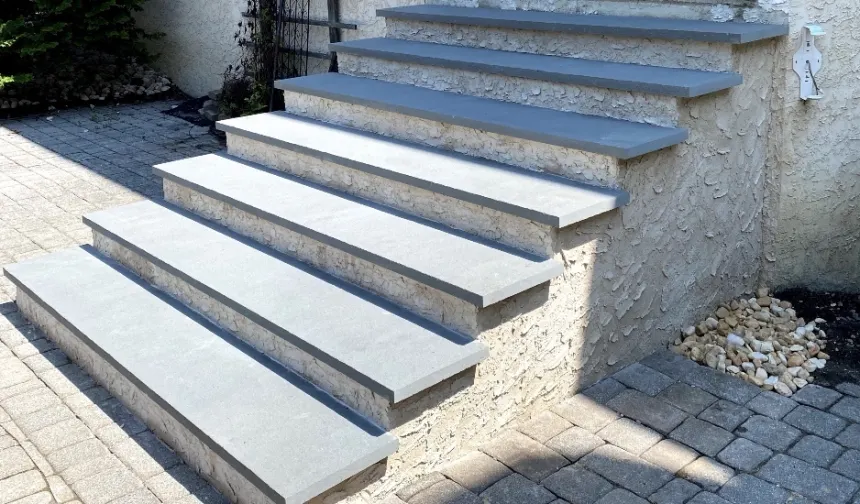
Exterior steps require consistent rise, stable support, secure edges, durable joints, and a clean connection to landings and walkways. Repair and construction can address cracked surfaces, loose units, deteriorated mortar, uneven sections, and damaged corners.

  • Step construction
  • Damaged tread repair
  • Loose unit correction
  • Landing and edge work
Not sure where the problem starts?

Tell us where the damage or moisture appears.

Use the estimate form with the affected area and property location, or send photographs to your@email.com.

☎✉